It’s not uncommon to hear people talk about making their own alcohol these days. Some are passionate about homebrewn beer, while others want to distill spirits. As it turns out, you can make all sort of fermented beverages if your enthusiasm doesn’t wither away.
Since many people are interested in doing it there are a lot of resources concerning both know-how and gear. The process has become rather industrial. Of course, not in terms of scope (though some distilleries have formidable output), but in regards to following a sequence of steps to get enticing end product.
Sometimes newcomers don’t have clear idea where exactly to start. A short brakedown of the necessary equipment and supplies will undoubtedly get you on the right track.
Keep It Simple
Its very important to stick to the basics at the beginning. This will protect you from splurging on a piece of equipment that, in the long run, might not be central to your home distilling efforts. Your safest bet is to get distilling equipment as part of a complete kit. They come with all pieces of alcohol distillation equipment you will need to start on your own. So, look for a kit with: boiler, condenser, fermenter, filter, measuring cup, large spoon and hydrometer. Sometimes they have supplies for your first batch, including spirit essences. Don’t worry if the distilling set you are about to buy doesn’t have all these contraptions. You can always get them separately and this will serve as an opportunity to learn a thing or two about each component in the process.
Distillery Still
As you may well know, distilling alcohol from fermented grains, fruits, or vegetables is possible because of the differences in boiling temperatures. The act of distilling serves to separate ingredients: you boil the contents at certain temperature and as the vessel cools off you collect the condensed liquid to capture your desired product. It’s a chemical process used in many fields and across cultures. Here, its employed to increase the measure of alcohol by volume.
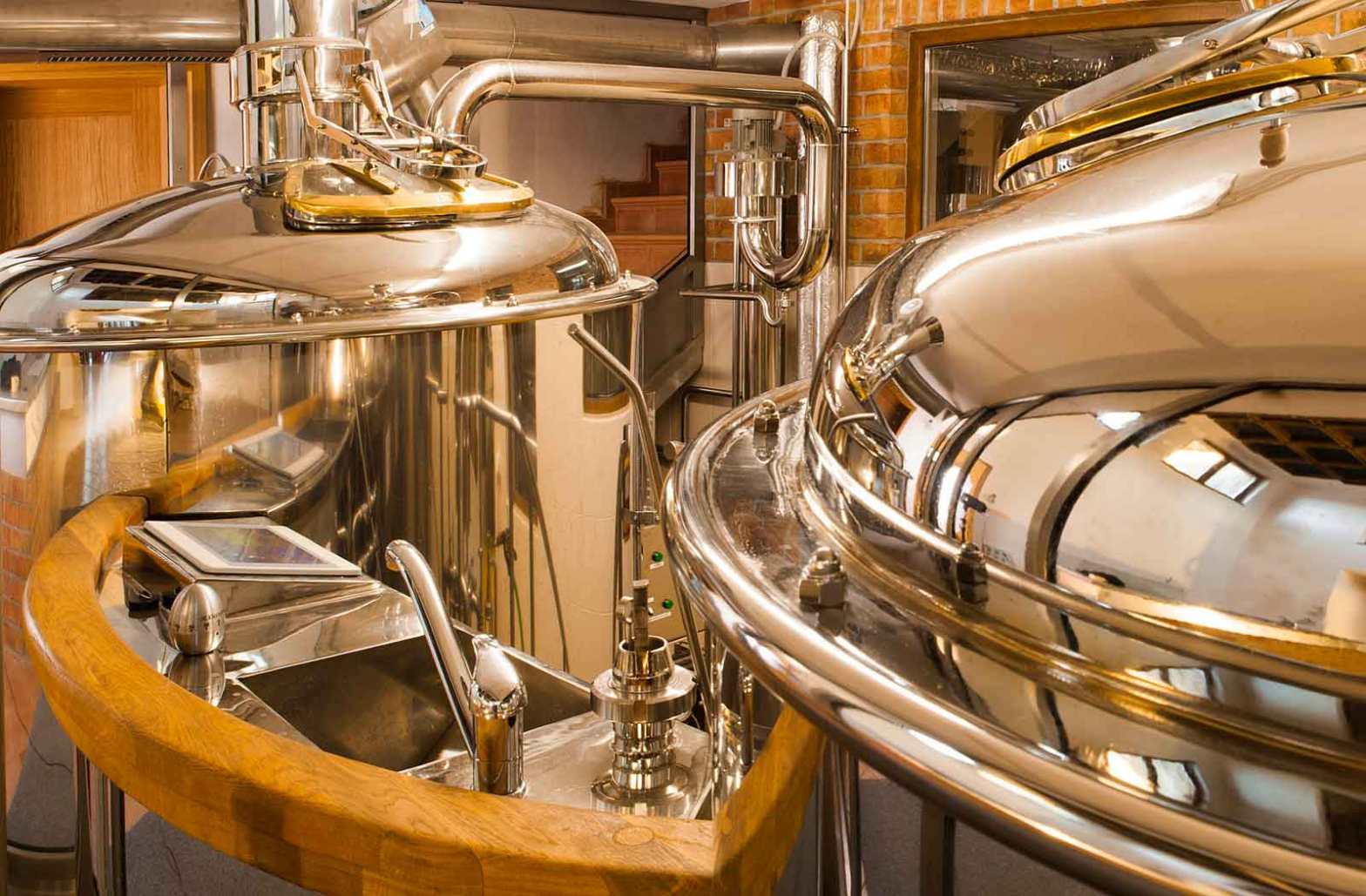
Naturally this influences your choice of still. Pot and column stills are most popular. The former is more basic, while the latter is more advanced and it can get you alcohol with high-purity. They are both made from copper, stainless steel or a combination of the two. Traditionally copper was used to isolate sulfuric compounds from the wash. It not only improves the taste of the end product but is also a better heat conductor. Stainless steel stills are more durable and cheaper than copper stills, but they can create sour tasting product as well.

Another important consideration when you choose distilling still is the range of spirits you want to create. In some instances you can use the same still to produce vodka, gin, whiskey, rum, and brandy. However if you are looking at making more then one beverage you are likely to need more than one still.
Distillery Boiler
Boilers play critical role in a distillery because they are used for sterilization and sanitation, to heat up the pots and kettles, and to maintain temperatures. Having reliable control over temperatures in the process contributes to the quality of your end product so choose your boiler wisely.
There are two types of boilers – low and high pressure. Low pressure boilers don’t create as much noise, their maintenance is cheap and are generally easy to use. High pressure steam boilers don’t require filters and are rather affordable.
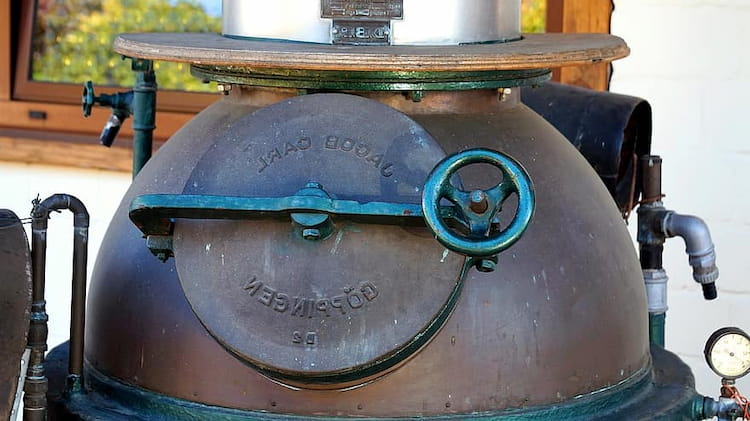
These days boilers have slick features including quick start up process which is great for small operations. You need to double check the measurements to make sure the boiler will fit through the door of distilleries based in sheds. If your distillery is set up in an industrial setting (or a warehouse) you probably won’t face this issue. And don’t forget to be mindful of the required maintenance for your model – older models need to be serviced by professionals and this can disrupt your production.
Distillery Fermenters
Before you engage in distilling, the mash has to be fermented. This is the process by which sugar from the mash gets converted into alcohol (ethanol) because of interaction with the yeast. Carbon dioxide is a by product in the process.

The fermenter controls the heated fermentation which is central to microorganism growth. High end producers go for stainless steel tanks, but you can start with plastic fermenter. Two factors of fermentation affect your end product: the quality of your yeast and the cleanliness of your gear. So, look for fermenter designed to stop bacterial growth and that is easy to clean. This is the best way to eliminate off-flavours from your product.
Advance Your Craft Over Time
These are the essential pieces of distilling equipment for beginners. Of course, there are a number of distilling accessories like stick on thermometer, airlock, grommet, distilling pumps and auxiliary tanks you can include in the set. The act of distilling alcohol is a process that includes steep learning curve so don’t expect to create rich-flavored drink from the first batch. You can always aspire to, of course, but be mindful that most of the secrets in this trade are hard earned and passed between generations. Gradual upgrades in your distilling gear can take you far. And as time passes you will not only discover your aptitude for distilling alcohol, but you will also increase your experience. Hopefully, every next batch from you cellar is better than the last one.
 A Little Bit Of Taste